
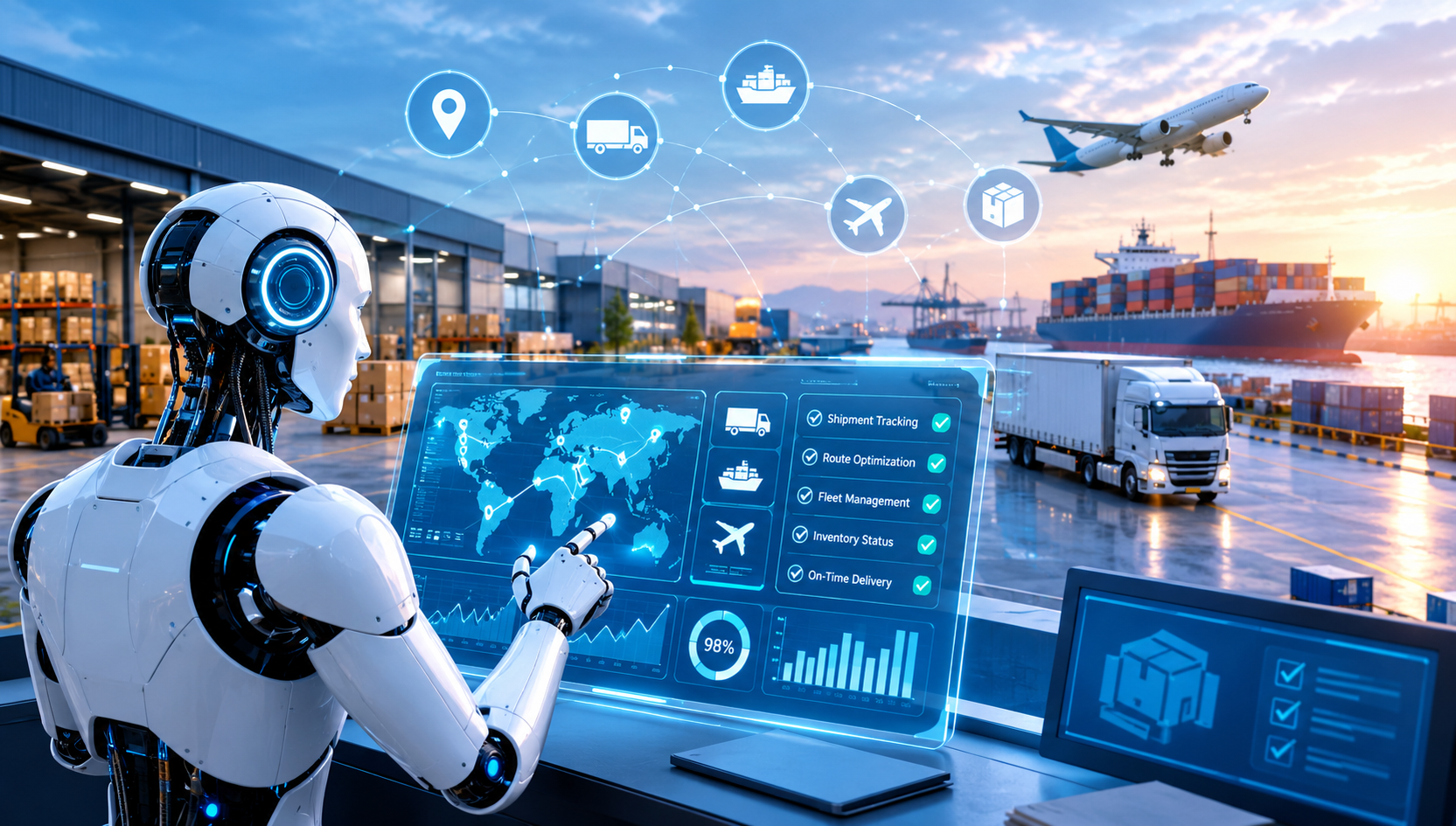
The logistics industry is undergoing a major transformation as businesses look for faster, smarter, and more efficient ways to manage increasingly complex supply chains. Rising customer expectations, fluctuating transportation costs, labor shortages, and growing volumes of operational data are encouraging logistics companies to adopt advanced technologies.
AI-powered logistics automation is emerging as one of the most important technologies shaping the future of supply chain operations. By combining artificial intelligence, machine learning, workflow automation, predictive analytics, and real-time data, businesses can automate repetitive processes while making better operational decisions.
What Is AI-Powered Logistics Automation?
AI-powered logistics automation uses artificial intelligence to automate and optimize logistics activities that traditionally require significant manual effort. These activities can include shipment management, route planning, fleet monitoring, order processing, inventory coordination, customer communication, and documentation.
Unlike traditional automation, which generally follows predefined rules, AI-powered systems can analyze large amounts of data, identify patterns, make predictions, and continuously improve their recommendations.
For logistics businesses, this can create a more connected operating environment where information flows between teams, systems, customers, warehouses, carriers, and transportation networks.
How AI Is Transforming Supply Chain Operations
1. Smarter Route Optimization
Transportation is one of the largest costs for many logistics organizations. Inefficient routes can increase fuel consumption, delivery times, and vehicle operating expenses.
AI-powered route optimization can analyze factors such as traffic conditions, delivery locations, vehicle capacity, weather, historical delivery data, and customer requirements. This allows logistics companies to identify more efficient routes and dynamically adjust plans when conditions change.
The result can be faster deliveries, better vehicle utilization, and reduced transportation costs.
2. Automated Logistics Workflows
Logistics operations involve numerous repetitive tasks, including entering shipment information, updating records, assigning tasks, generating notifications, and processing documents.
Workflow automation can reduce the amount of manual work required by automatically moving information between systems and triggering actions based on predefined conditions or AI-generated insights.
For example, when a shipment status changes, an automated workflow can update the appropriate records, notify relevant employees, and send a customer communication without requiring multiple manual steps.
3. Improved Supply Chain Visibility
Visibility is critical for effective supply chain management. Businesses need to know where shipments are, what inventory is available, whether deliveries are on schedule, and where potential disruptions may occur.
AI can bring data from multiple sources together and help organizations identify important operational trends. Real-time dashboards and intelligent alerts can provide teams with greater visibility into transportation, inventory, orders, and delivery performance.
Better visibility enables businesses to respond to issues before they become larger operational problems.
AI-Powered Predictive Analytics in Logistics
One of the biggest advantages of AI in logistics is the ability to move from reactive management to predictive decision-making.
Traditional logistics processes often respond to problems after they occur. AI-powered predictive analytics can analyze historical and real-time data to identify potential risks and opportunities.
For example, AI can help predict:
- Potential delivery delays
- Transportation demand
- Fleet maintenance requirements
- Inventory shortages
- Route disruptions
- Customer demand patterns
- Supply chain bottlenecks
With these insights, logistics managers can make proactive decisions and improve operational resilience.
AI for Fleet and Transportation Management
Fleet management involves coordinating vehicles, drivers, routes, maintenance schedules, fuel consumption, and delivery requirements. Managing these factors manually can become increasingly difficult as fleets grow.
AI-powered fleet management can analyze vehicle and operational data to identify opportunities for improved utilization. Businesses can use intelligent systems to monitor fleet performance, optimize assignments, predict maintenance requirements, and improve scheduling.
This can help reduce unnecessary downtime while supporting more efficient transportation operations.
Automating Logistics Documentation
Documentation is another area where logistics companies can benefit from intelligent automation. Shipping and transportation operations often involve invoices, purchase orders, delivery documents, bills of lading, contracts, and other records.
AI-powered document intelligence can extract relevant information from documents and reduce manual data entry. Information can then be routed to the appropriate workflow or system.
This can improve processing speed, reduce data-entry errors, and allow employees to spend more time on higher-value activities.
Improving Customer Experience
Customer expectations in logistics continue to increase. Customers want accurate shipment information, faster responses, and reliable delivery timelines.
AI-powered logistics automation can support better customer experiences by providing automated updates, faster responses, and improved shipment visibility.
For logistics providers, connecting customer relationship management with operational workflows can create a more complete view of customer interactions and delivery activities.
This allows teams to identify customer needs more quickly and deliver a more consistent service experience.
Reducing Logistics Costs Through Automation
Cost reduction is a major reason businesses are investing in logistics automation. AI can help identify inefficiencies across transportation, labor, inventory, documentation, and customer service processes.
By automating repetitive activities and optimizing resource allocation, businesses can potentially reduce operational expenses while improving productivity.
Importantly, automation does not simply replace manual tasks. It can help employees focus on strategic decision-making, exception management, customer relationships, and activities that require human judgment.
Building the Future of Intelligent Supply Chains
The future of logistics will increasingly depend on connected technologies that can communicate, analyze data, and make intelligent recommendations.
AI-powered logistics automation can become an important foundation for this transformation. Organizations that integrate AI with CRM platforms, workflow automation, analytics, fleet management, and supply chain systems can create more agile and responsive operations.
As AI technology continues to evolve, logistics businesses will have more opportunities to automate complex processes and gain deeper insights from their operational data.
Conclusion
AI-powered logistics automation is changing how modern supply chains operate. From route optimization and fleet management to predictive analytics, workflow automation, documentation, and customer communication, AI can help logistics companies improve efficiency and make smarter decisions.
Businesses that embrace intelligent automation can build more flexible, visible, and data-driven supply chains while reducing operational complexity.
For logistics organizations preparing for the future, adopting AI is no longer simply about technology adoption. It is about creating a smarter operating model that can respond quickly to changing customer expectations, market conditions, and supply chain challenges.