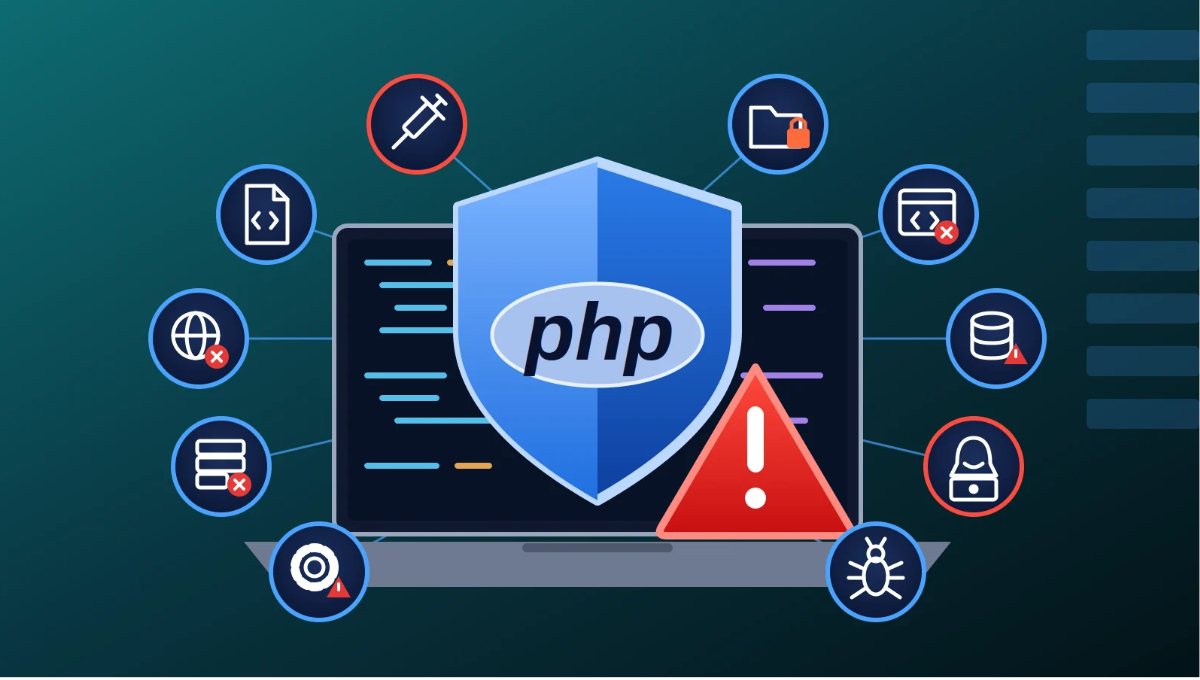
PHP powers a huge share of business websites, from online stores to customer portals. That popularity makes it a constant target for hackers. You don’t need to write code to protect your business, but you do need to understand the risks. Here are the 10 most common PHP vulnerabilities to ask your developer about, with the business impact and the fix for each.
1. SQL Injection
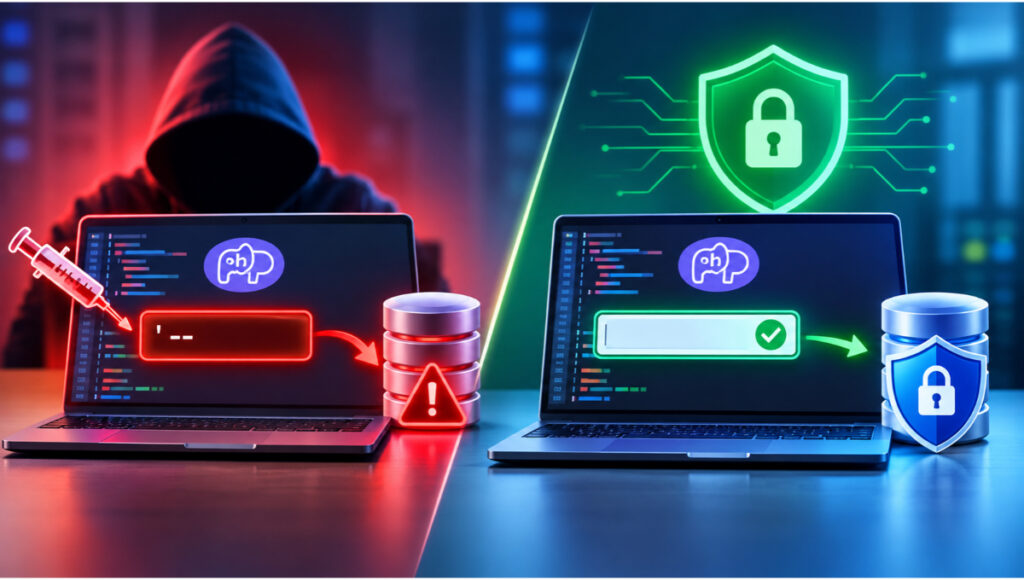
Attackers enter malicious database commands into forms or URLs, tricking your site into exposing or deleting data. The impact can be stolen customer records, legal trouble and lost trust. Fix: use prepared statements so user input is never treated as code.
2. Cross-Site Scripting (XSS)
Hackers plant harmful scripts on your pages that run in visitors’ browsers, stealing logins or redirecting users to fake sites. Customers blame you, and your reputation takes the hit. Fix: escape all user-generated content before displaying it.
3. Cross-Site Request Forgery (CSRF)
An attacker tricks a logged-in user into performing actions without knowing it, such as changing a password or making a payment. The result is unauthorized transactions and account takeovers. Fix: add unique CSRF tokens to every form.
4. File Inclusion (LFI/RFI)
Attackers manipulate your site into loading files of their choosing, from your own server or an external one. This can lead to a complete server takeover. Fix: never build file paths from user input, and allow only a fixed list of files.
5. Insecure File Upload
If your site accepts uploads without checks, criminals can upload malicious scripts disguised as images. The impact is a hacked server, malware and costly downtime. Fix: validate file types and sizes, rename uploads and store them outside the web root.
6. Broken Authentication
Weak passwords, poor session handling and missing login lockouts let attackers impersonate your customers or staff. That means data breaches and fraud under your brand name. Fix: enforce strong passwords, multi-factor authentication and secure session settings.
7. Insecure Deserialization
PHP can rebuild objects from stored data, and attackers can tamper with that data to run their own code. This can hand them full control of your application. Fix: never deserialize untrusted data, and use safer formats such as JSON.
8. Sensitive Data Exposure
Passwords, payment details and personal information that are stored or sent without protection are easy targets. Expect regulatory fines, lawsuits and lost customers. Fix: encrypt data in transit with HTTPS and hash passwords with modern algorithms.
9. Security Misconfiguration
Default settings, visible error messages, open directories and exposed admin panels give attackers a map of your system. It is one of the most common problems and one of the easiest to prevent. Fix: harden your server and PHP settings, and turn off error display in production.
10. Vulnerable Components
Outdated PHP versions, plugins, themes and libraries contain known flaws that attackers actively scan for. One neglected plugin can compromise your entire site. Fix: keep everything updated and remove what you don’t use.
How to Protect Your PHP Website
Most PHP vulnerabilities are preventable with regular updates, secure coding practices and periodic security audits. Share this list with your development team, ask which items are already covered, and make website security a standing part of your maintenance routine.