
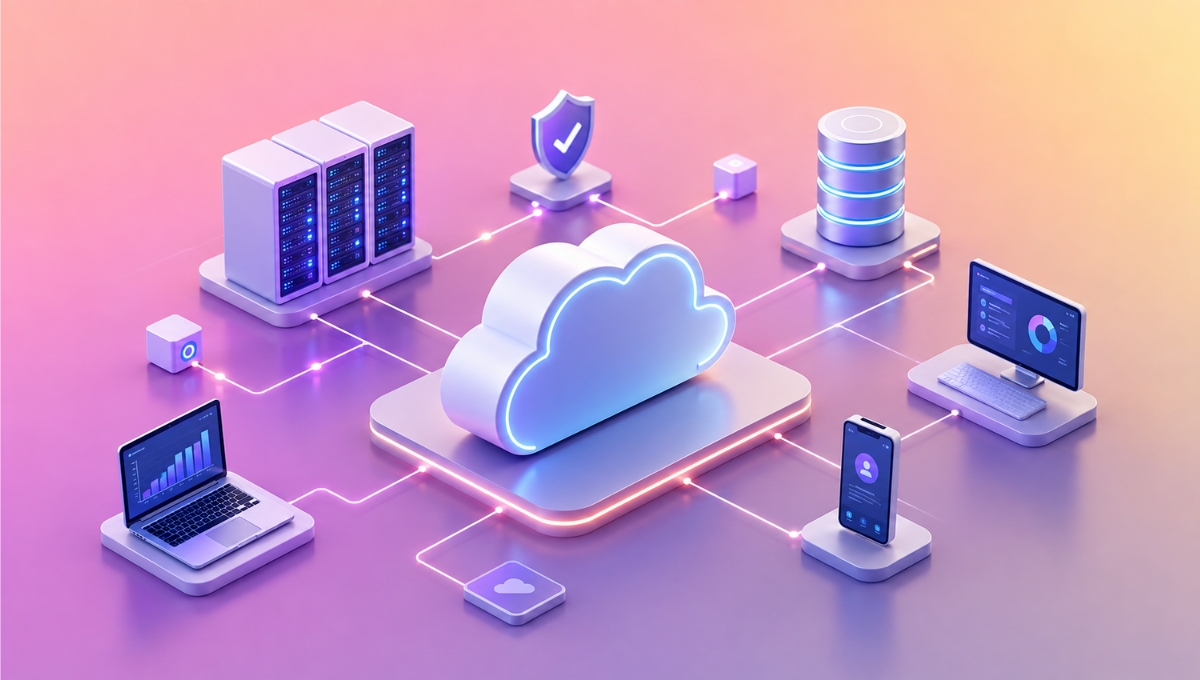
Enterprise Software as a Service (SaaS) has become a powerful model for organizations looking to modernize operations, improve accessibility, and reduce the complexity of managing traditional software infrastructure. Unlike conventional software that is installed and maintained on individual systems, SaaS platforms are hosted in the cloud and delivered through the internet. Enterprise SaaS development
For enterprises, a well-designed SaaS platform can support thousands of users, integrate with existing business systems, automate workflows, and scale as business requirements evolve. However, building an enterprise-grade SaaS solution requires careful planning, robust architecture, strong security, and continuous optimization.
What Is Enterprise SaaS Development?
Enterprise SaaS development is the process of designing, developing, deploying, and maintaining cloud-based software specifically for large organizations and complex business environments.
Enterprise SaaS platforms typically support multiple users, departments, locations, and business processes. They may include features such as role-based access, centralized administration, dashboards, analytics, subscription management, API integrations, and automated workflows.
The primary goal is to create a platform that is secure, scalable, reliable, and easy to manage while delivering measurable business value.
Why Businesses Are Adopting Enterprise SaaS
Organizations are increasingly moving toward SaaS because it provides flexibility and reduces the operational burden associated with traditional software deployment.
Scalability
Enterprise platforms need to accommodate changing user numbers and workloads. Cloud-based SaaS architecture allows businesses to increase resources as demand grows without completely redesigning the application.
Cost Efficiency
SaaS can reduce infrastructure and maintenance expenses because organizations do not necessarily need to manage extensive on-premises hardware. Centralized updates can also reduce the cost and effort associated with deploying software changes.
Accessibility
Employees can access SaaS applications from different locations and devices, supporting distributed teams and modern hybrid work environments.
Faster Innovation
Because SaaS platforms are centrally managed, development teams can release improvements and new features more efficiently. Continuous updates help organizations respond to changing customer and market expectations.

Key Components of a Scalable Enterprise SaaS Platform
Building a successful enterprise SaaS solution involves more than developing an attractive user interface. The underlying architecture must be designed to support long-term growth.
Multi-Tenant Architecture
Multi-tenancy allows a single SaaS application to serve multiple organizations or customers while keeping their data and configurations appropriately isolated.
A well-designed multi-tenant architecture can improve infrastructure utilization and simplify platform management. Depending on business requirements, organizations can choose different approaches to tenant isolation, database architecture, and resource allocation.
API-First Architecture
APIs are essential for connecting SaaS platforms with other enterprise applications. An API-first approach allows systems such as CRM, ERP, payment platforms, analytics tools, and identity providers to communicate effectively.
Strong API design also makes it easier to expand the SaaS ecosystem and introduce new integrations in the future.
Enterprise Authentication and Access Control
Enterprise applications often contain sensitive business information. Authentication and authorization therefore need to be built into the platform from the beginning.
Features such as role-based access control, single sign-on, multi-factor authentication, and permission management can help organizations control who can access specific resources and functions.
Subscription and Billing Management
Many SaaS platforms operate using subscription-based pricing models. A comprehensive billing system can manage plans, subscriptions, invoices, renewals, upgrades, downgrades, and payment-related workflows.
Automated billing capabilities can reduce manual administration while creating a more consistent customer experience.
Security in Enterprise SaaS Development
Security should be considered throughout the entire SaaS development lifecycle rather than added after development is completed.
Enterprise SaaS platforms should incorporate secure authentication, encryption, access controls, secure APIs, monitoring, logging, vulnerability management, and appropriate backup strategies.
Data isolation is particularly important in multi-tenant environments. Each customer’s information should be protected from unauthorized access while administrators maintain appropriate visibility and control.
Organizations should also evaluate applicable industry regulations and compliance requirements when designing their SaaS infrastructure.
Cloud Infrastructure and Performance Optimization
A scalable enterprise SaaS application requires reliable cloud infrastructure. Cloud-native technologies can help applications respond to changing workloads while improving availability and resource utilization.
Performance optimization can include database optimization, caching, load balancing, asynchronous processing, content delivery networks, and efficient application architecture.
Monitoring and observability are equally important. Performance metrics, application logs, error tracking, and infrastructure monitoring can help development teams identify issues before they significantly affect users.
Designing an Enterprise SaaS User Experience
Enterprise applications often contain sophisticated functionality, but complexity should not make the platform difficult to use.
An effective SaaS interface should provide intuitive navigation, clear dashboards, customizable workflows, responsive design, and role-specific experiences.
User experience should also be considered during onboarding. Guided setup processes, documentation, knowledge bases, and contextual assistance can help users understand the platform faster and improve adoption.
SaaS Development Lifecycle
A structured development process can reduce risks and improve the quality of an enterprise SaaS platform.
The process generally begins with business and technical requirements analysis. Development teams then define the architecture, user experience, technology stack, security model, and integration requirements.
The next stages typically include product design, development, testing, deployment, monitoring, and continuous improvement.
Testing should cover functionality, performance, security, compatibility, APIs, and scalability. Automated testing and continuous integration can help teams deliver updates more reliably.
How to Scale an Enterprise SaaS Platform
Scaling should be planned from the beginning rather than treated as a future problem.
Businesses can use horizontal scaling to add application resources when demand increases. Database optimization, distributed architectures, caching, queue-based processing, and cloud-based infrastructure can also support growing workloads.
Another important consideration is product scalability. The platform should be designed so that new modules, integrations, user roles, and business capabilities can be introduced without requiring major architectural changes.
The Role of AI and Automation in Enterprise SaaS
AI and automation are increasingly becoming important components of modern SaaS platforms. Organizations can use intelligent automation to streamline repetitive tasks, analyze business data, personalize workflows, and improve decision-making.
AI-powered capabilities can also support areas such as customer service, predictive analytics, document processing, recommendations, and operational monitoring.
When implemented responsibly, AI can transform an enterprise SaaS platform from a basic business application into a more intelligent digital business ecosystem.
Conclusion
Enterprise SaaS development requires a combination of strategic planning, scalable architecture, secure engineering, intuitive design, and continuous optimization. Businesses need platforms that can support current requirements while remaining flexible enough to accommodate future growth.
From multi-tenant architecture and API integrations to cloud infrastructure, security, analytics, billing, and automation, every component plays an important role in building a reliable enterprise SaaS solution.
Partnering with an experienced technology team can help organizations transform complex business requirements into scalable SaaS platforms designed for long-term performance, innovation, and growth.